
WITHIN A
BEE'S FLIGHT
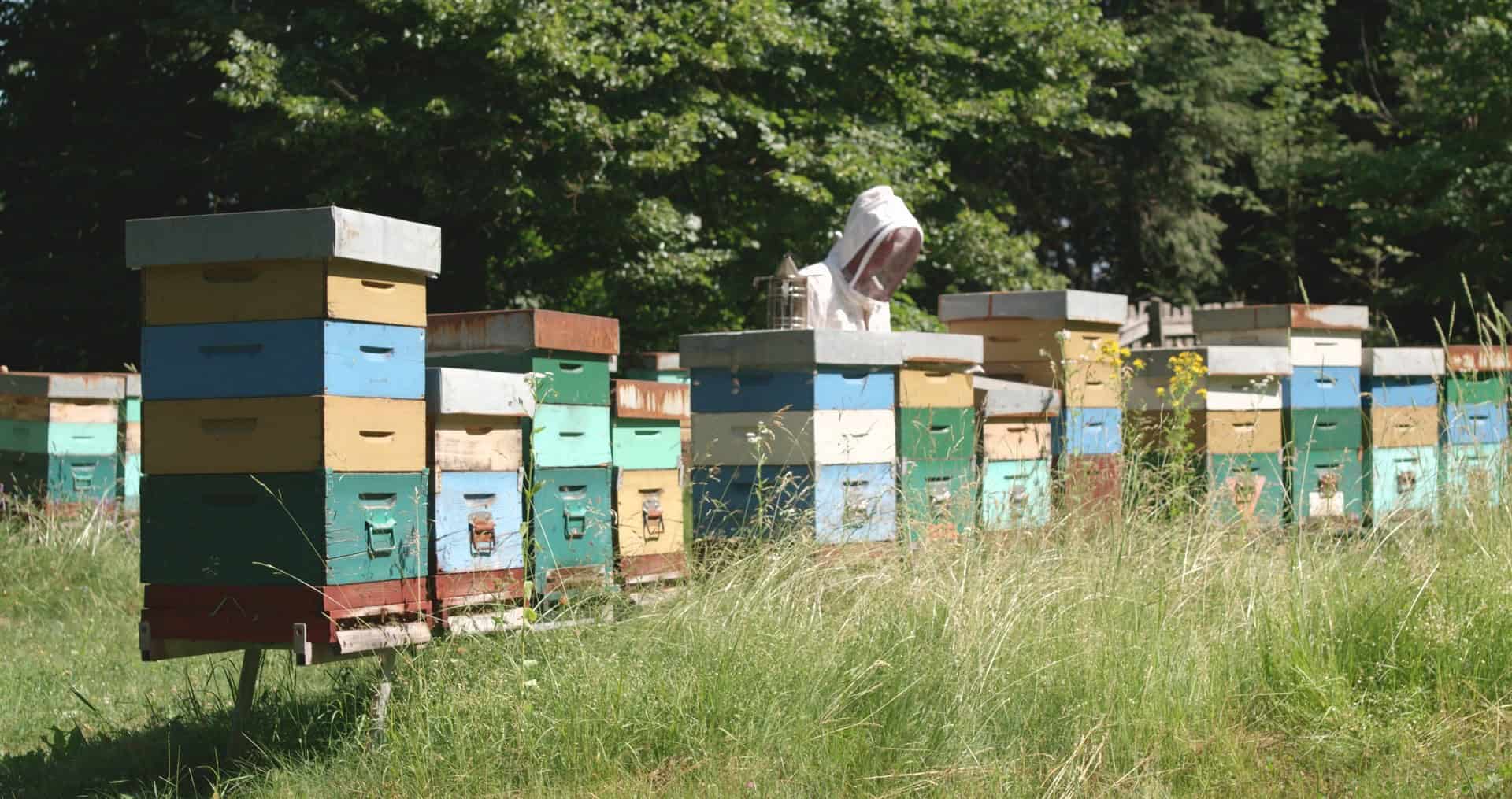
Bees leave the hives and cross fields, cities and mountain edges, carrying back fragments of the world around them. In the pollen, scientists find chemical residues, hidden pressures and the signs of choices that can no longer be postponed.
SYNOPSIS
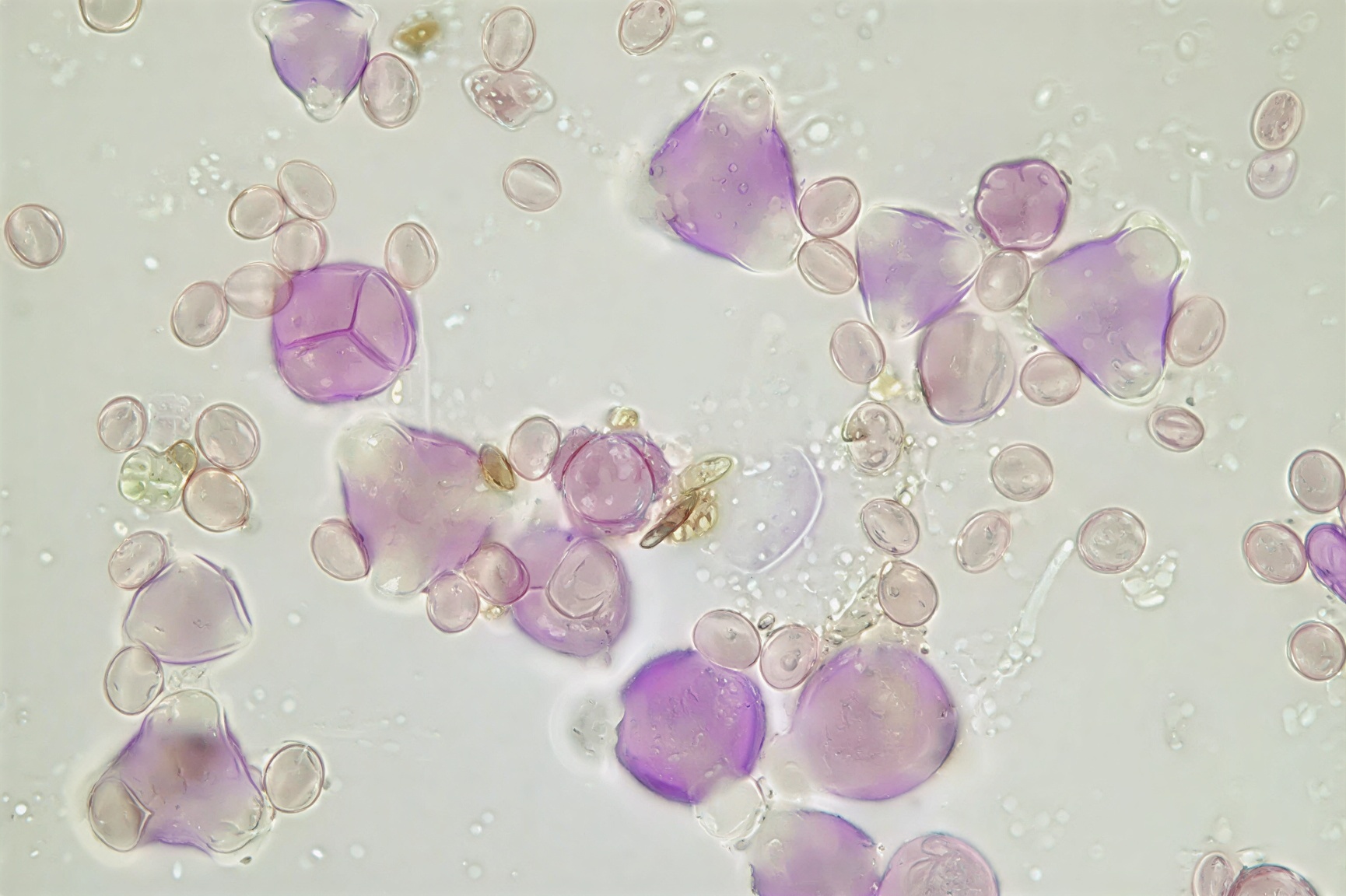
A landscape read through pollen: pesticides, fungicides, banned molecules.
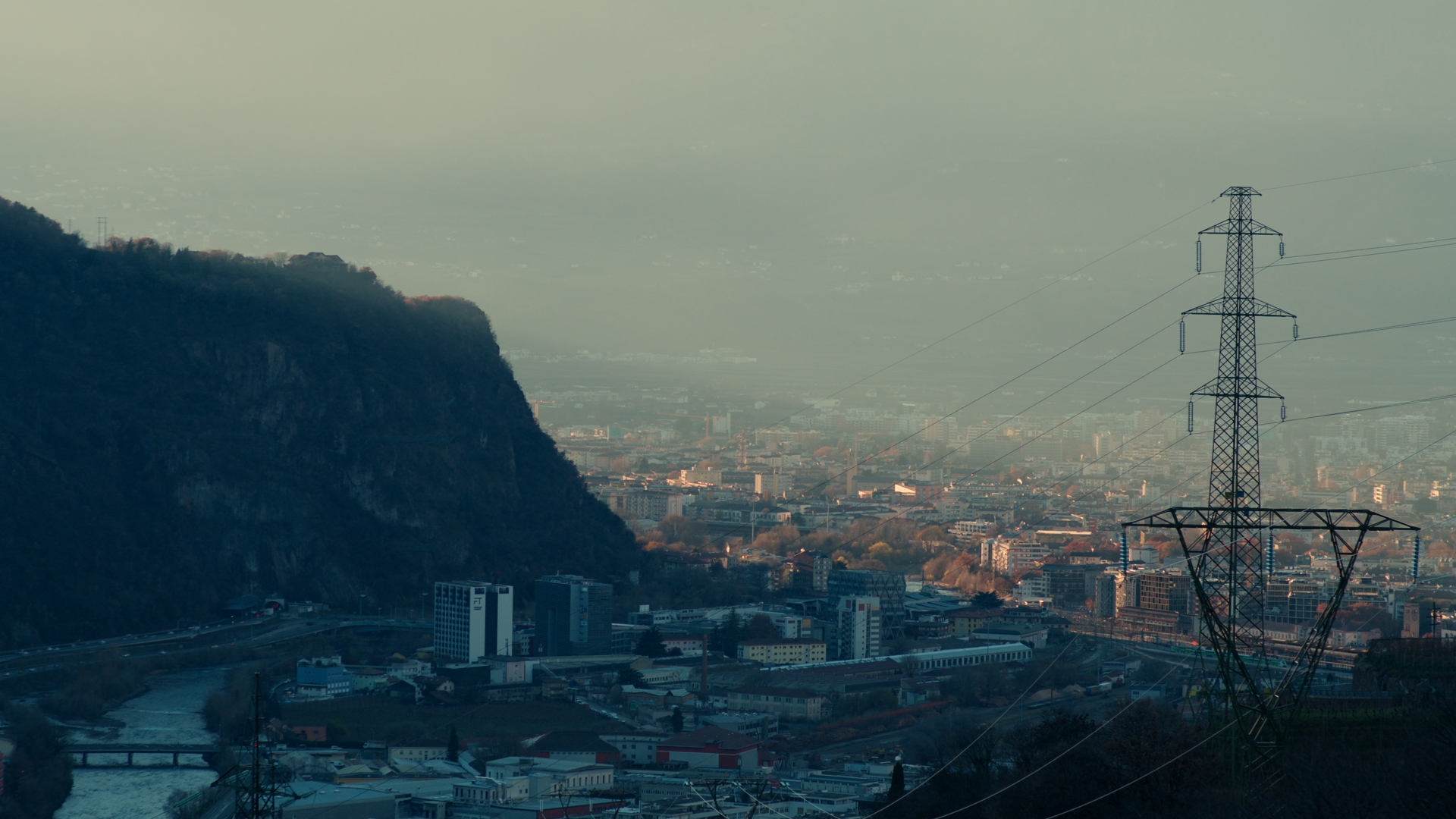
The film follows a group of researchers and beekeepers in Trentino-Alto Adige working on an environmental biomonitoring project based on the analysis of pollen collected by bees. Each sample helps identify chemical residues in the environment and map forms of contamination that often remain outside standard monitoring systems. Through their daily activity, bees collect tiny, dispersed traces, giving scientists a concrete tool to understand what is happening across farmland, urban areas and mountain edges.
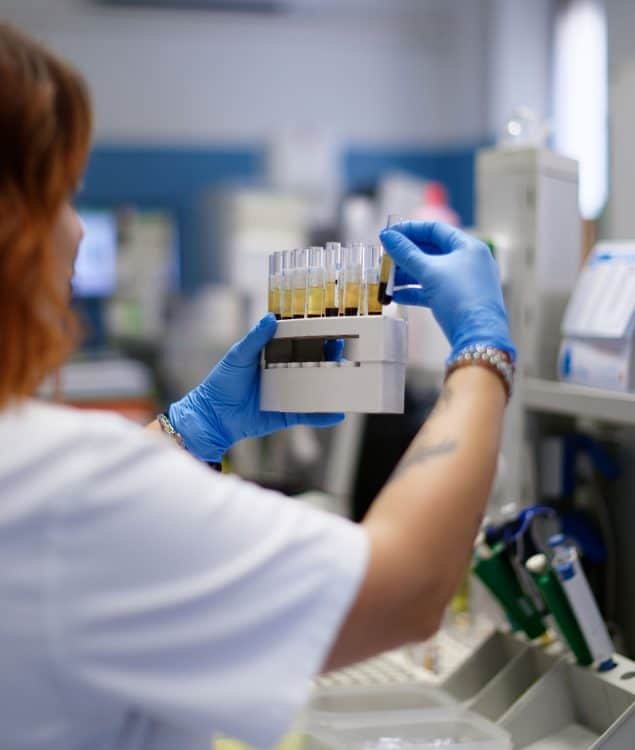
The documentary follows this research process in the field and in the laboratory, showing how science rooted in a specific place can address questions linked to environmental health, production practices and the way we perceive what is still considered unspoiled.
Starting from a local case, the film gradually widens its scope to Europe. The project brings together researchers, beekeepers and citizens involved in citizen science, from data collection and sample analysis to public presentations of the results. Scientific research becomes part of a wider discussion on how we live, cultivate and observe the environment.
Where does Europe stand on environmental sustainability?
MAIN CHARACTERS
Sergio Angeli
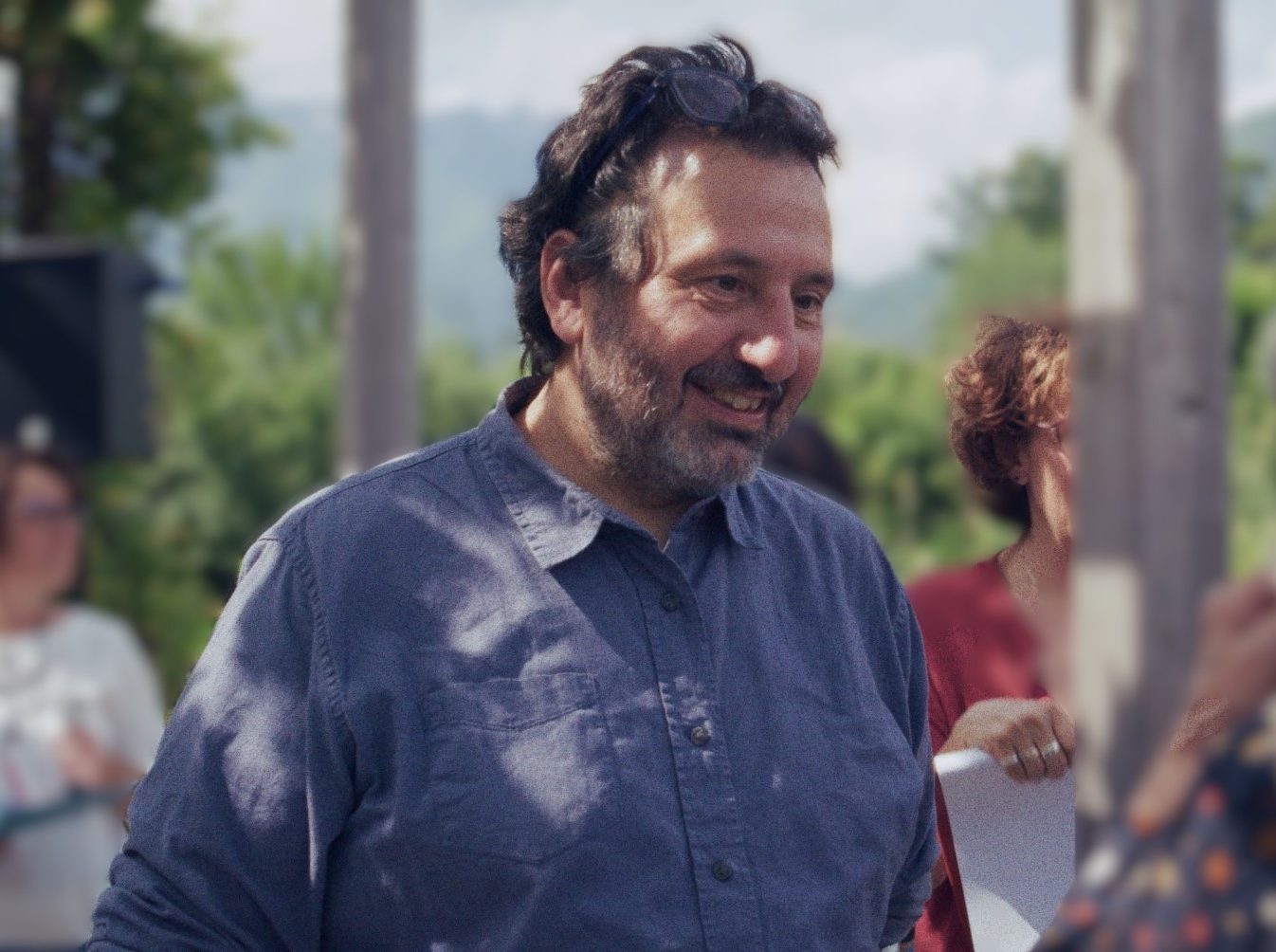
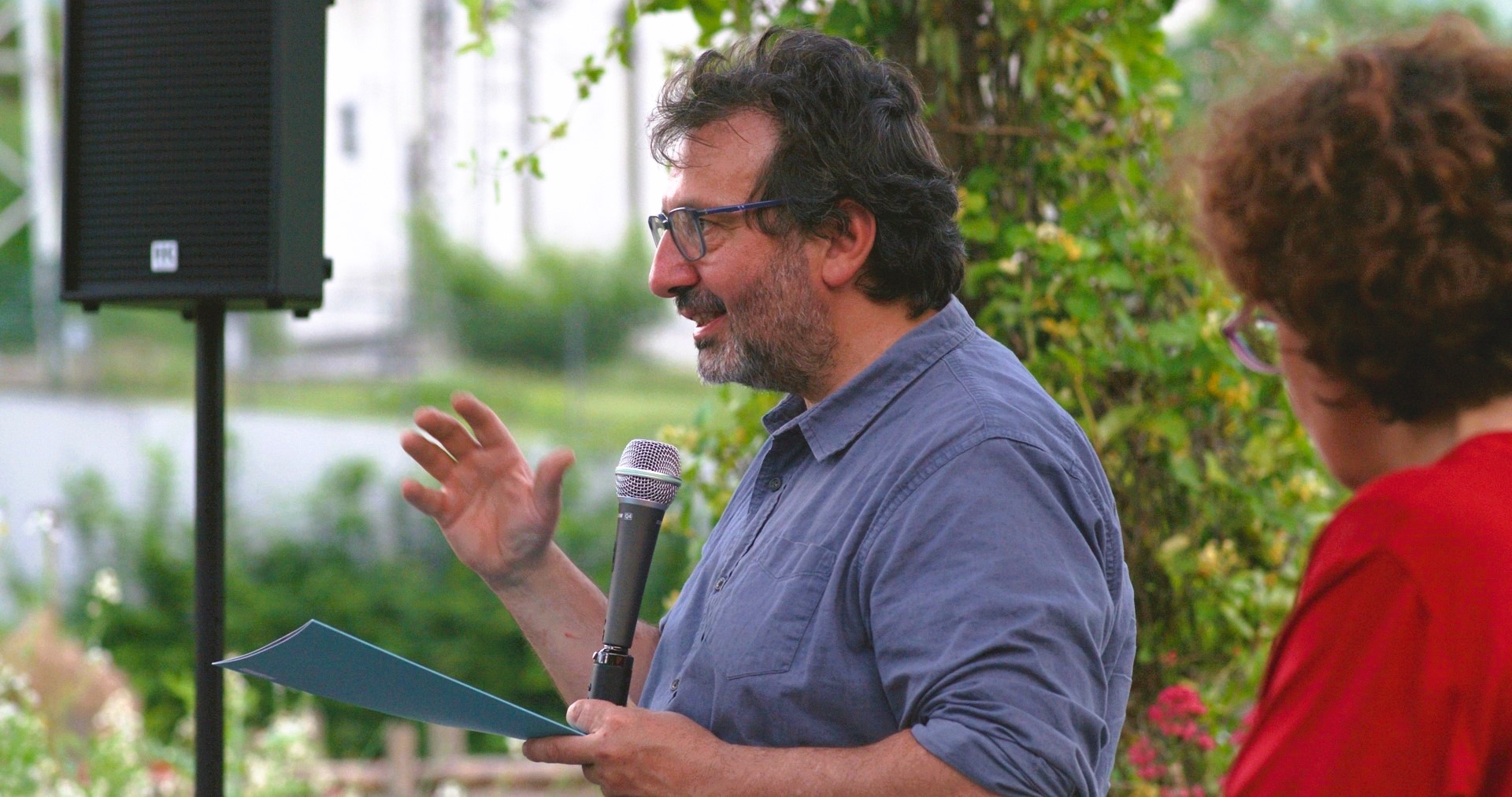
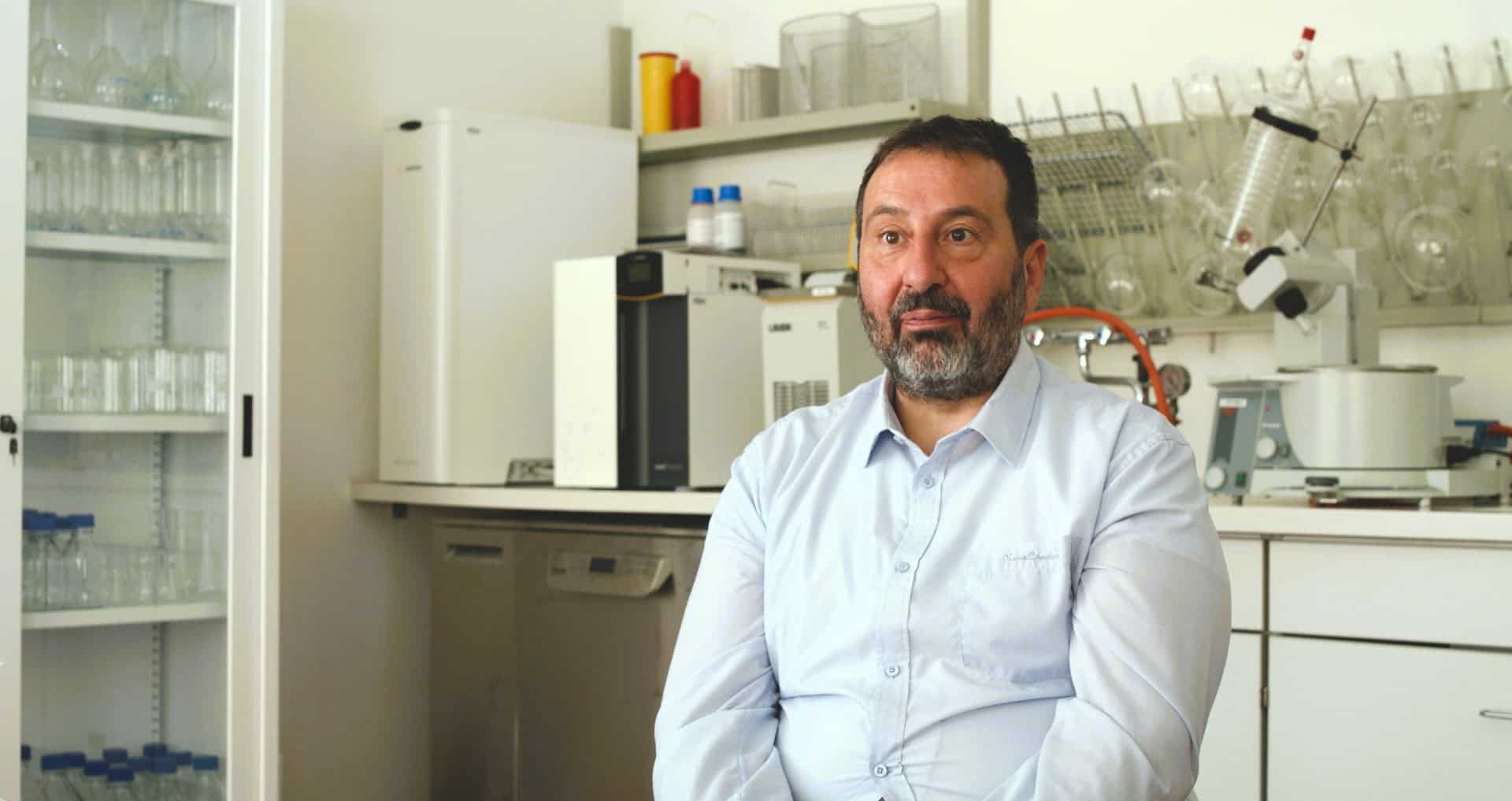
An entomologist and professor at the Free University of Bozen-Bolzano, he is the project's scientific promoter. For years he has studied bee behavior not only as a species, but as a way of reading the territory.
For him, pollen is a living matrix: an archive that records every contact between insect and environment. Sergio is a key figure in the film: rigorous, precise, and methodical, yet aware when a discovery also demands a political gesture. His way of working brings a concrete image sharply into focus: bees flying across the territory unknowingly collect the chemical traces that tell us what we breathe, what we eat, and what kind of environment we live in. His goal is to make this reading accessible and useful for the people who live in those places, even at the cost of unsettling established balances.
Maria Vittoria Zucchelli
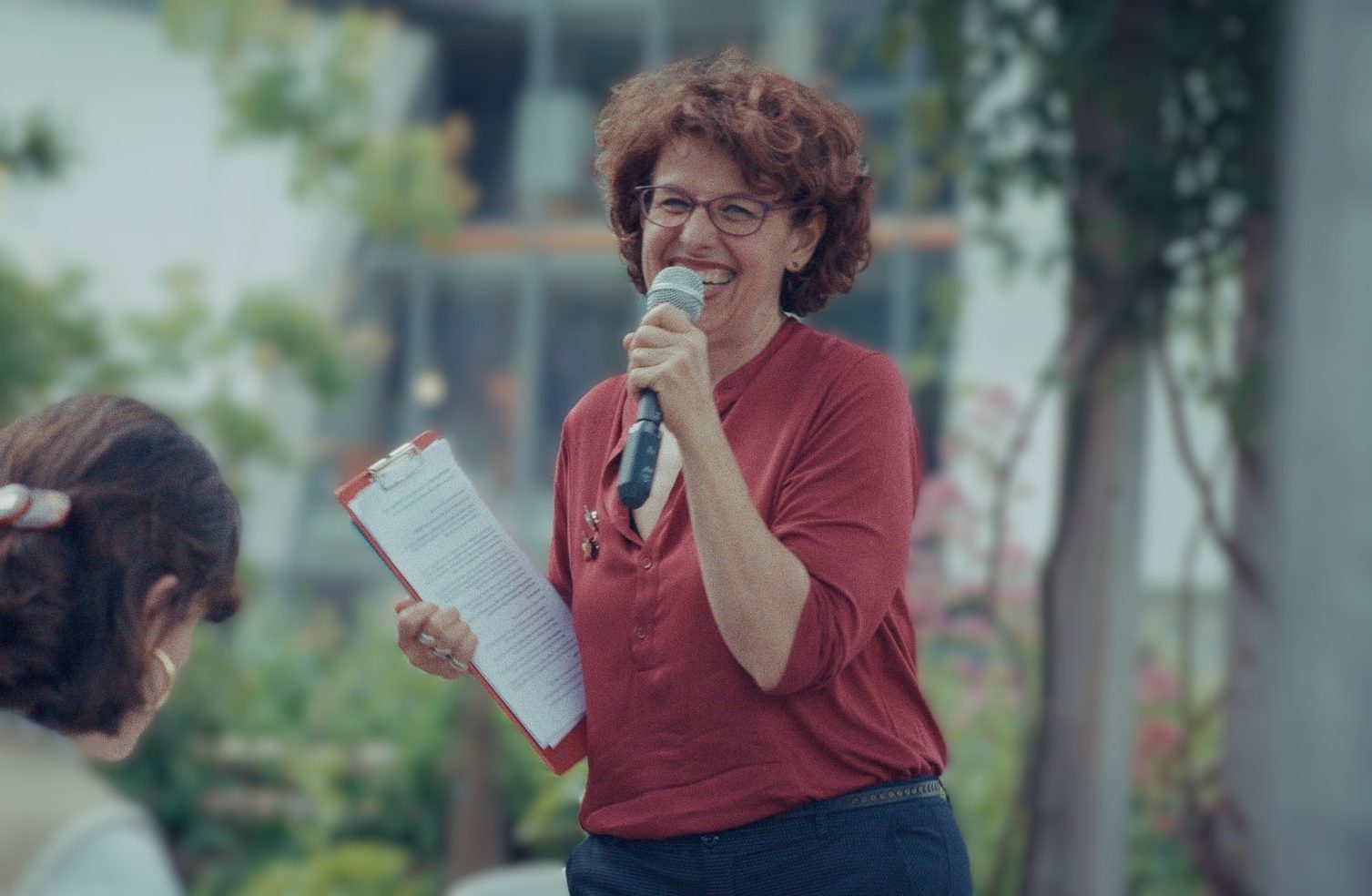
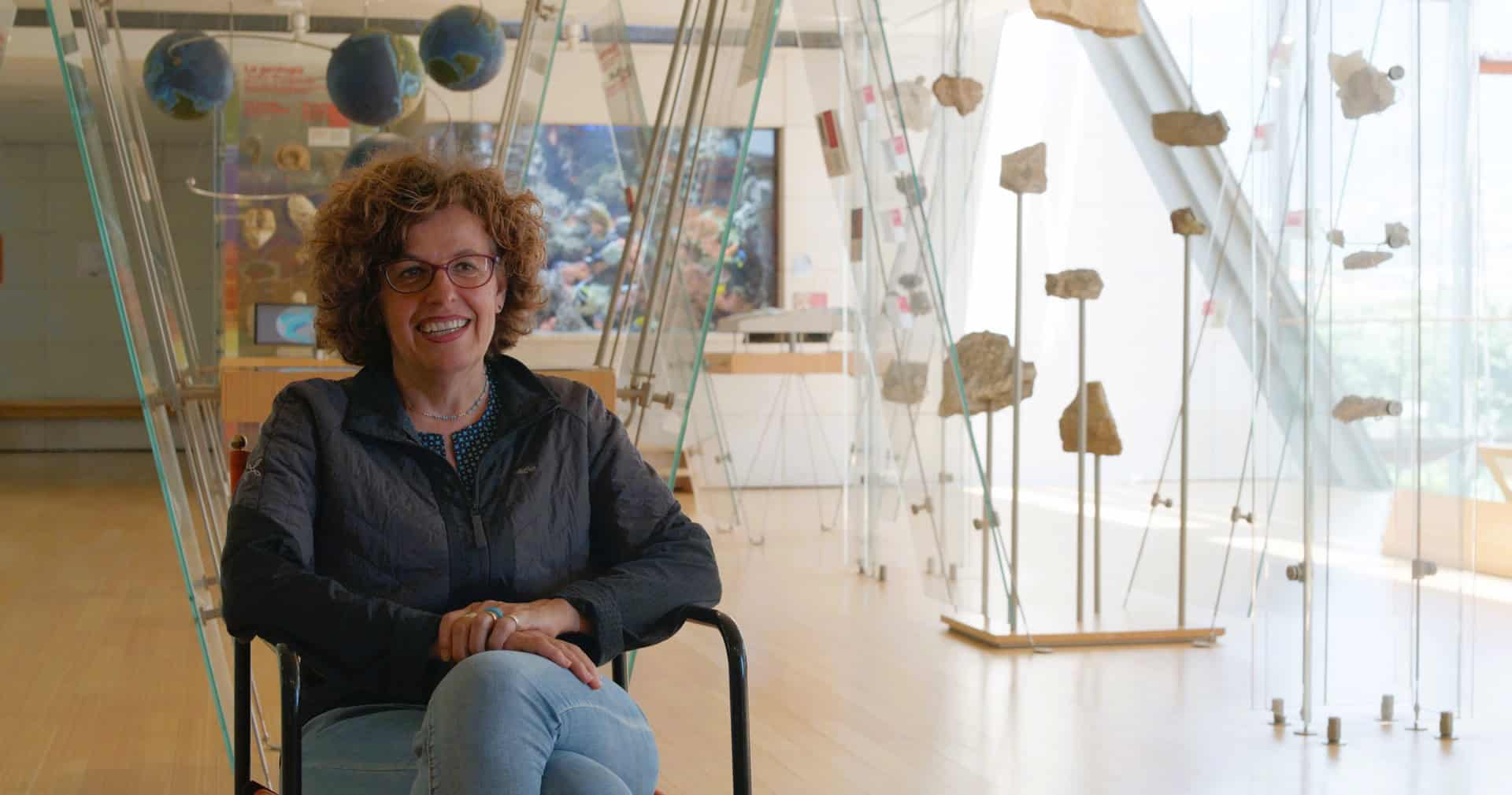
A biologist with a background in ecology. She works at MUSE - the Science Museum of Trento, where she focuses on environmental education and cultural planning. For years she has developed educational programs that connect science, sustainability, and everyday life, with particular attention to the European dimension.
She collaborates on monitoring projects that use bees as bioindicators, involving citizens and institutions. In WITHIN A BEE'S FLIGHT, she oversees the educational paths and public presentation activities. Practical and open to dialogue, she knows how to make complex content accessible without oversimplifying it, creating connections between worlds that speak different languages.
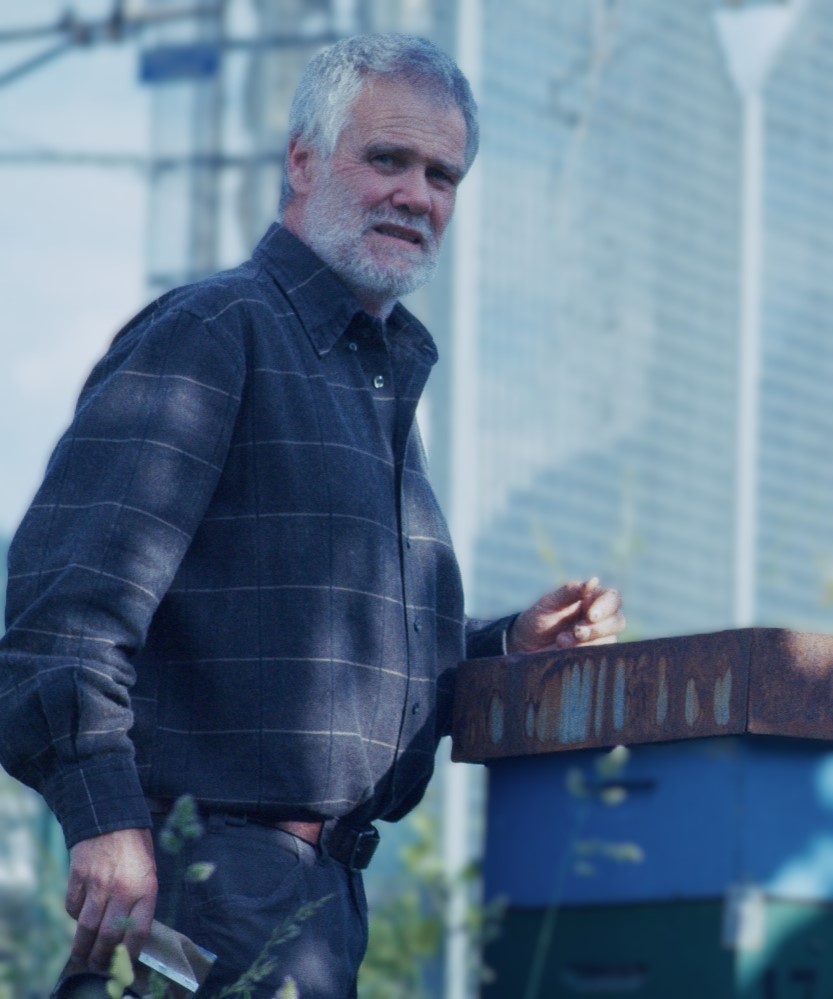
Stefano Peterlana
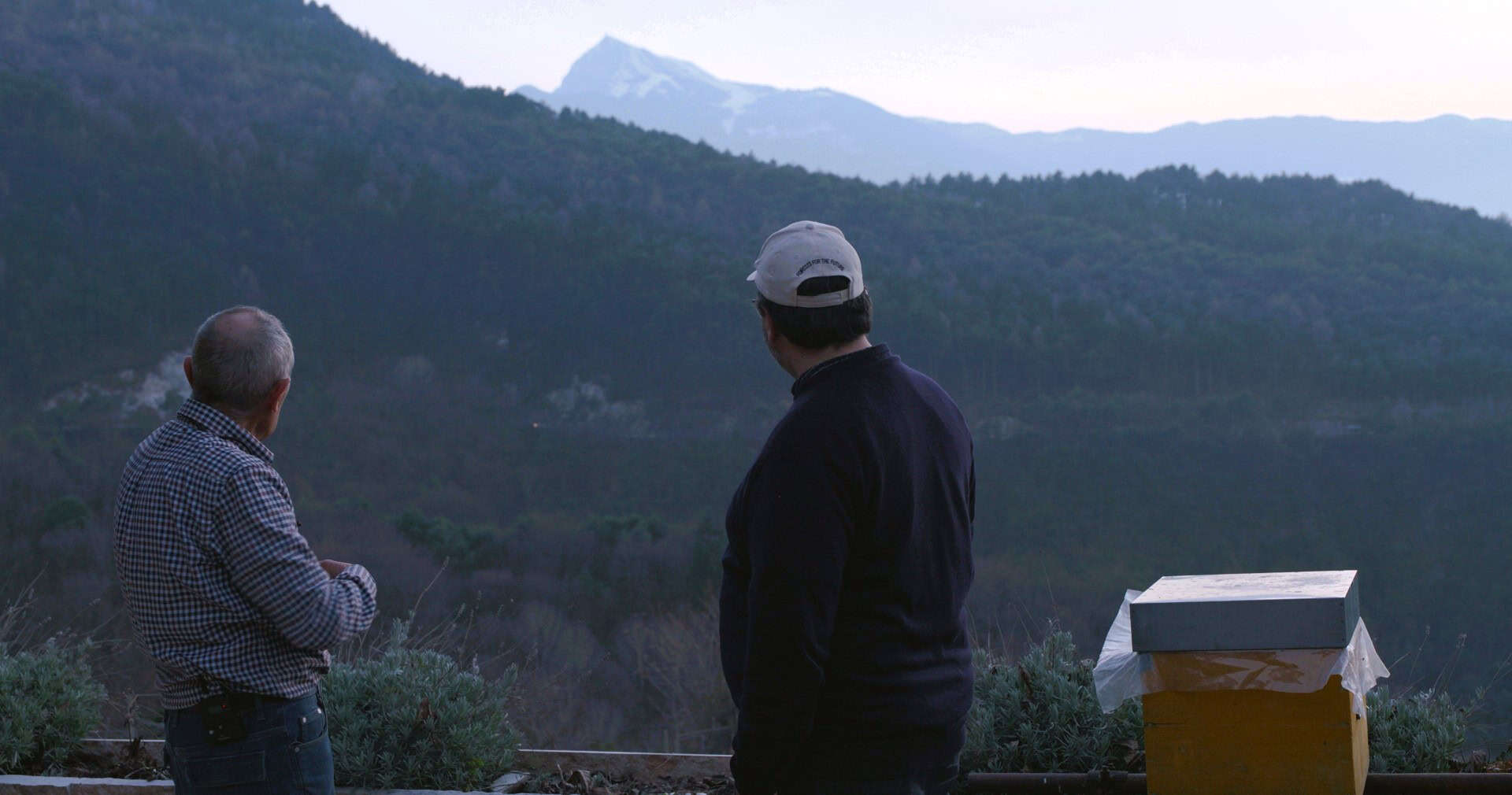
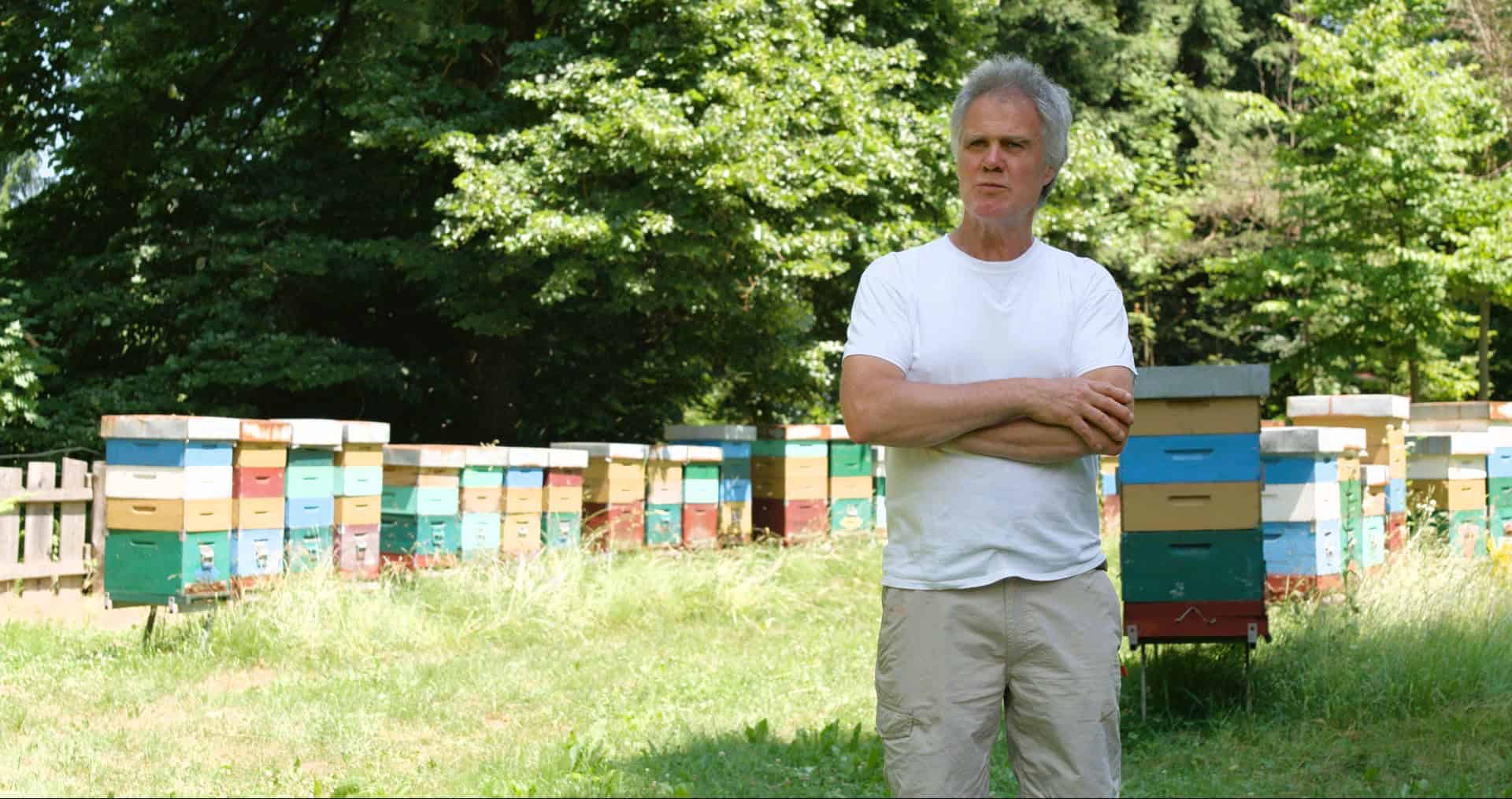
A professional beekeeper, since 1997 he has run a beekeeping business based on nomadic practices and certified organic production, managing between 400 and 500 hives across Italy. In WITHIN A BEE'S FLIGHT, Peterlana takes part directly by making several hives available for the research. His collaboration is essential for collecting environmental data through pollen gathered by bees, contributing to the mapping of landscape contamination. Peterlana embodies a vision of beekeeping as a practice deeply intertwined with ecosystems. In the film, his presence offers a grounded, concrete view of the relationship between humans, bees, and territory. His experience emerges without the need for explanation: it is measured in gestures, care, and everyday choices
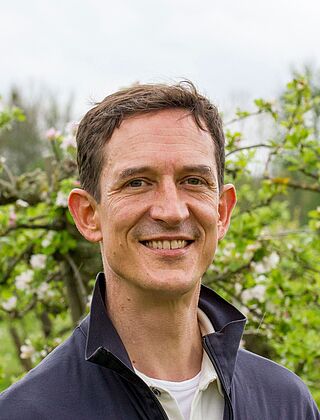
Jens Pistorius
Director of the Institute for Bee Protection at the Julius Kühn-Institut in Braunschweig, Germany's federal research center for cultivated plants. His work lies at the intersection of ecotoxicology, agriculture, and pollinator protection. Within the institute, he coordinates research dedicated to the protection of honey bees and wild bees, with particular attention to poisoning incidents, the effects of pesticides and biocides, and the development of scientific methods for assessing the impact of agricultural practices on bee health. The Julius Kühn-Institut also notes his involvement in major international technical and scientific risk-assessment contexts, including EFSA, ICPPR, EPPO, and OECD.
THE PHASES
-
Phase 1Installation and sampling (spring)Apple blossom
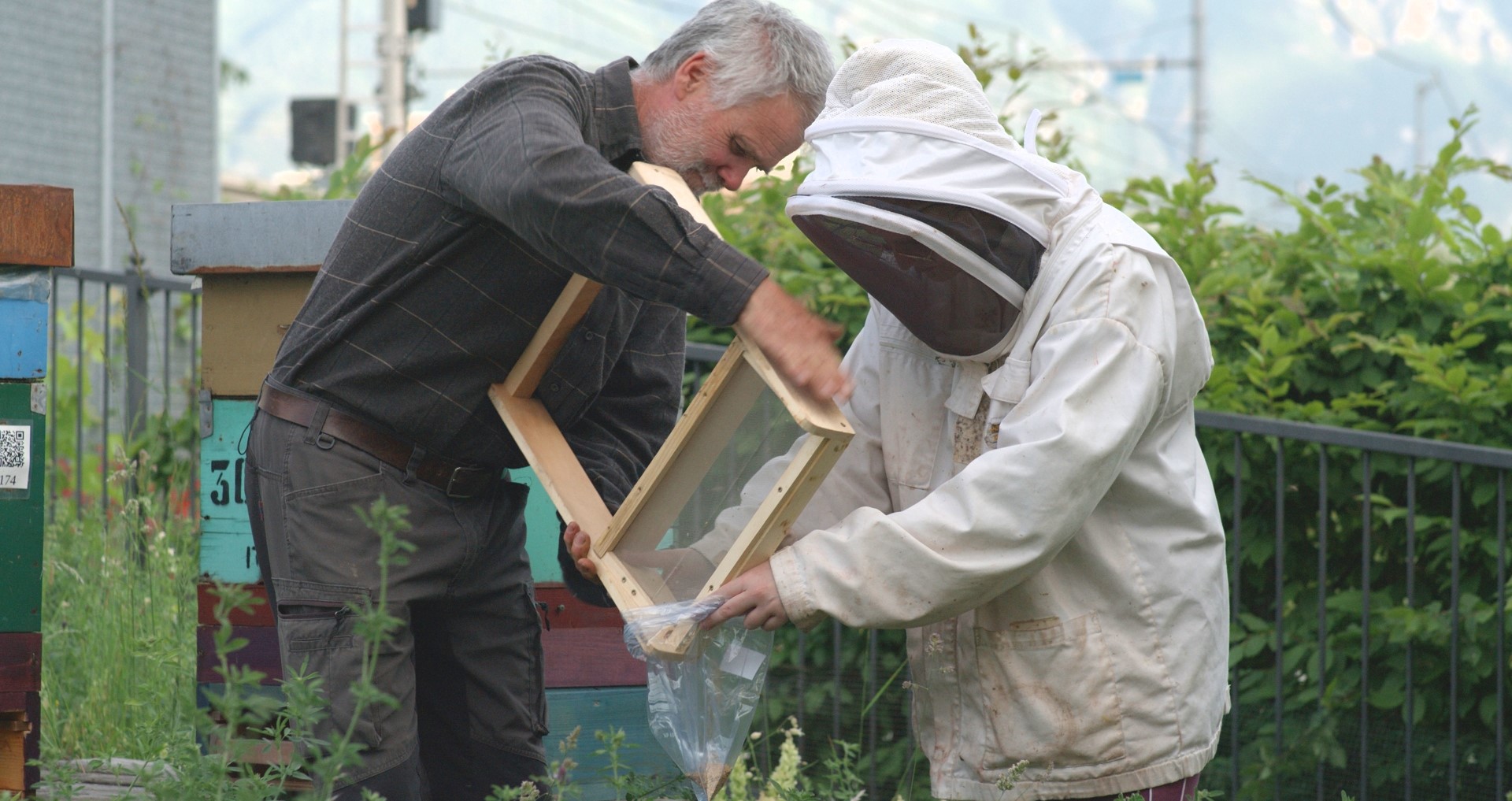
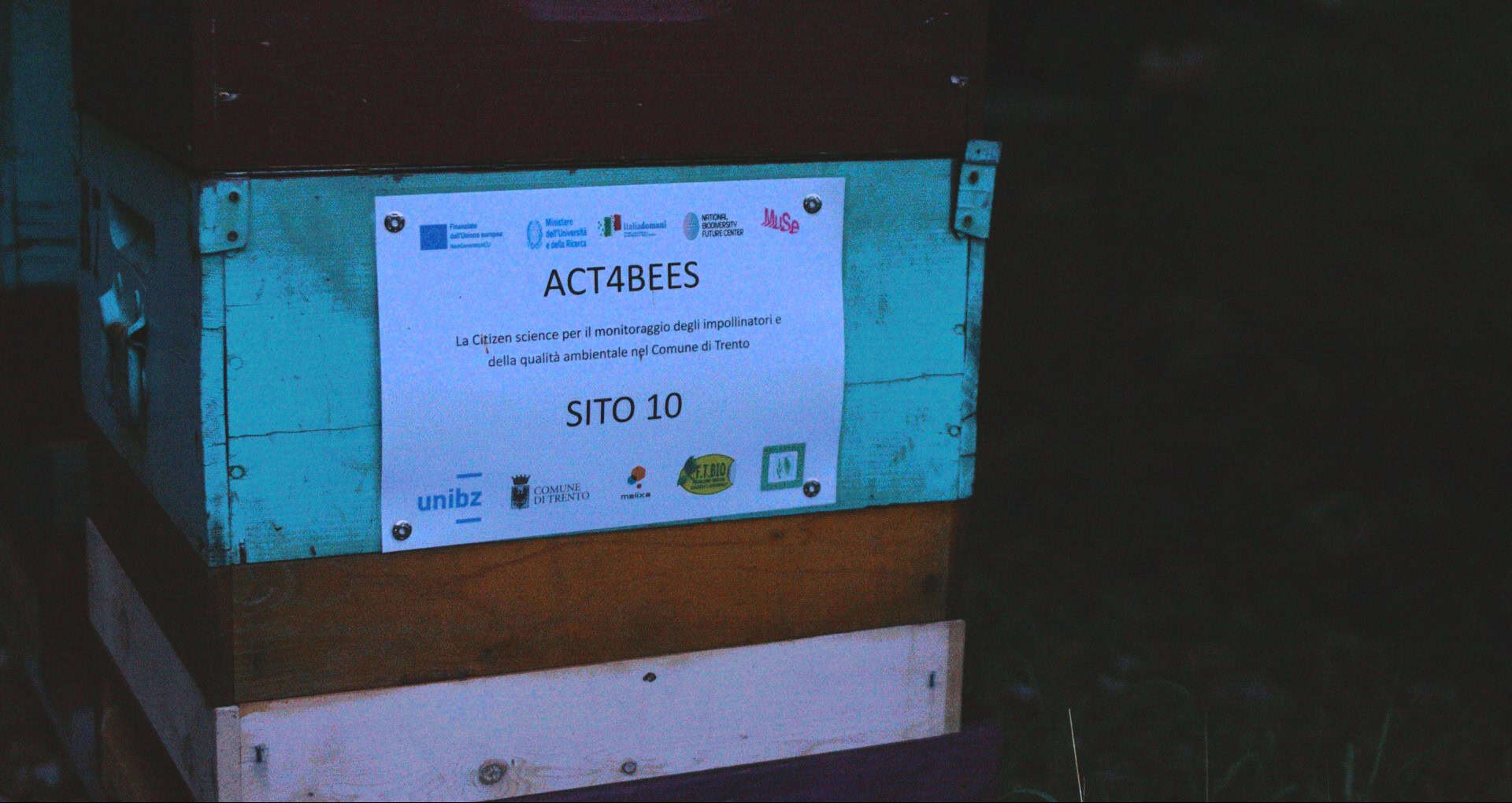
Pollen traps in 22 apiaries across agricultural valley floors, mountain contexts, and Trento. Field meetings, operational decisions, direct contact with the bees. After about ten days: first sampling, collection, and preservation of the samples.
-
Phase 2Second sampling and building the picture (summer)July
The landscape has changed and the continuity of the work becomes visible. Samples are collected and frozen; communication intensifies among beekeepers, researchers, and institutional contacts: a phase of accumulation and connection.
-
Phase 3Cataloguing,
waiting, public presentation
(autumn-winter)Months of analysisCataloguing at the Free University of Bozen-Bolzano and shipment to certified laboratories for chemical and palynological analyses. The film also follows the preparation of the public presentation: municipal halls, public spaces, open meetings.
POLLEN COLLECTION
-
Micro-sampling across the territory
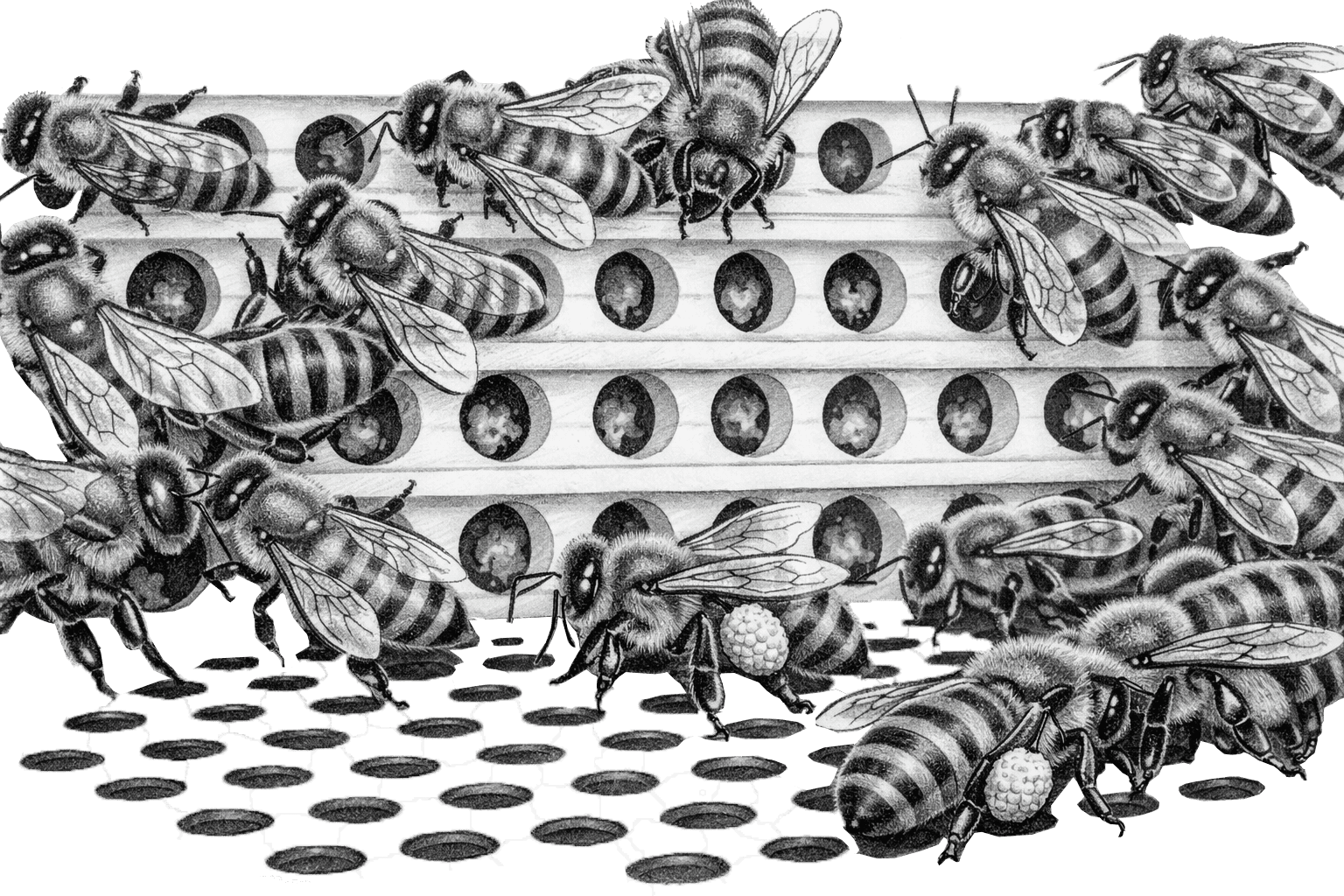
A bee colony, thanks to its ability to pollinate the territory in a capillary way, can carry out about 2 million micro-samplings every day within a radius of roughly 1.5 km, over a total area of 700 hectares.
-
Pollen transport
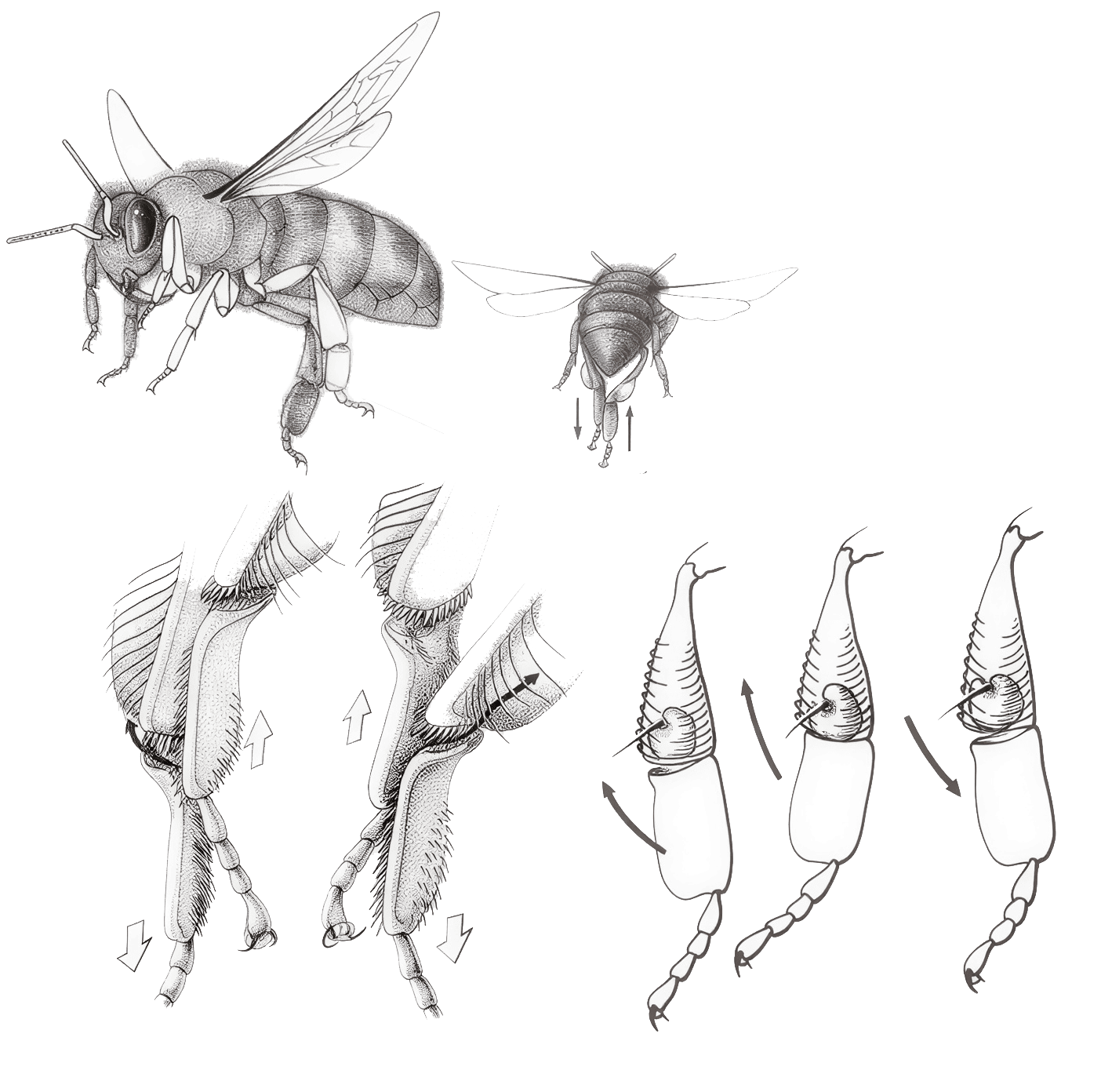
The forager bee transfers pollen from the brush of one leg to the basket of the opposite leg, alternately using the two combs.
-
Capture and preservation
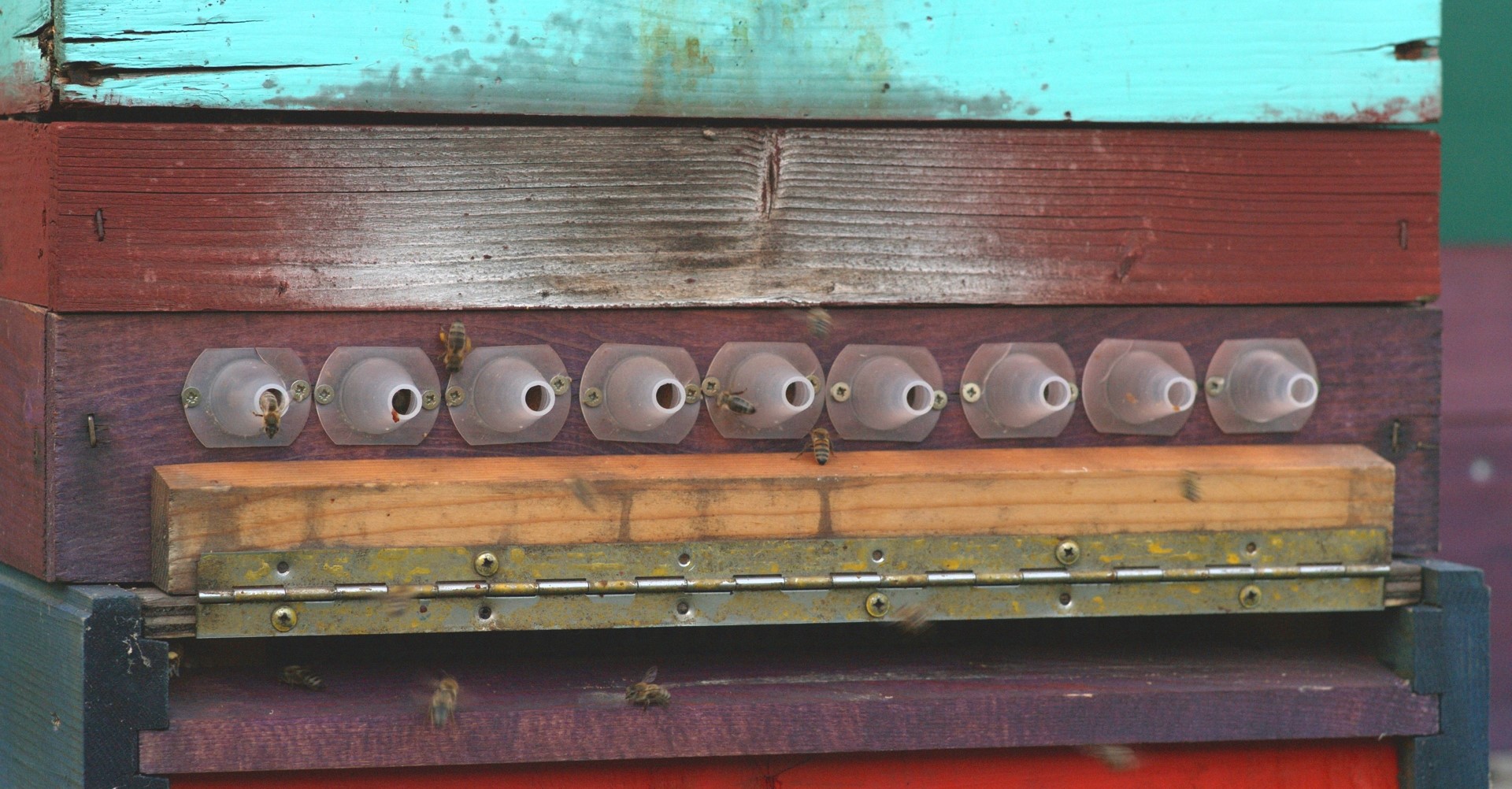
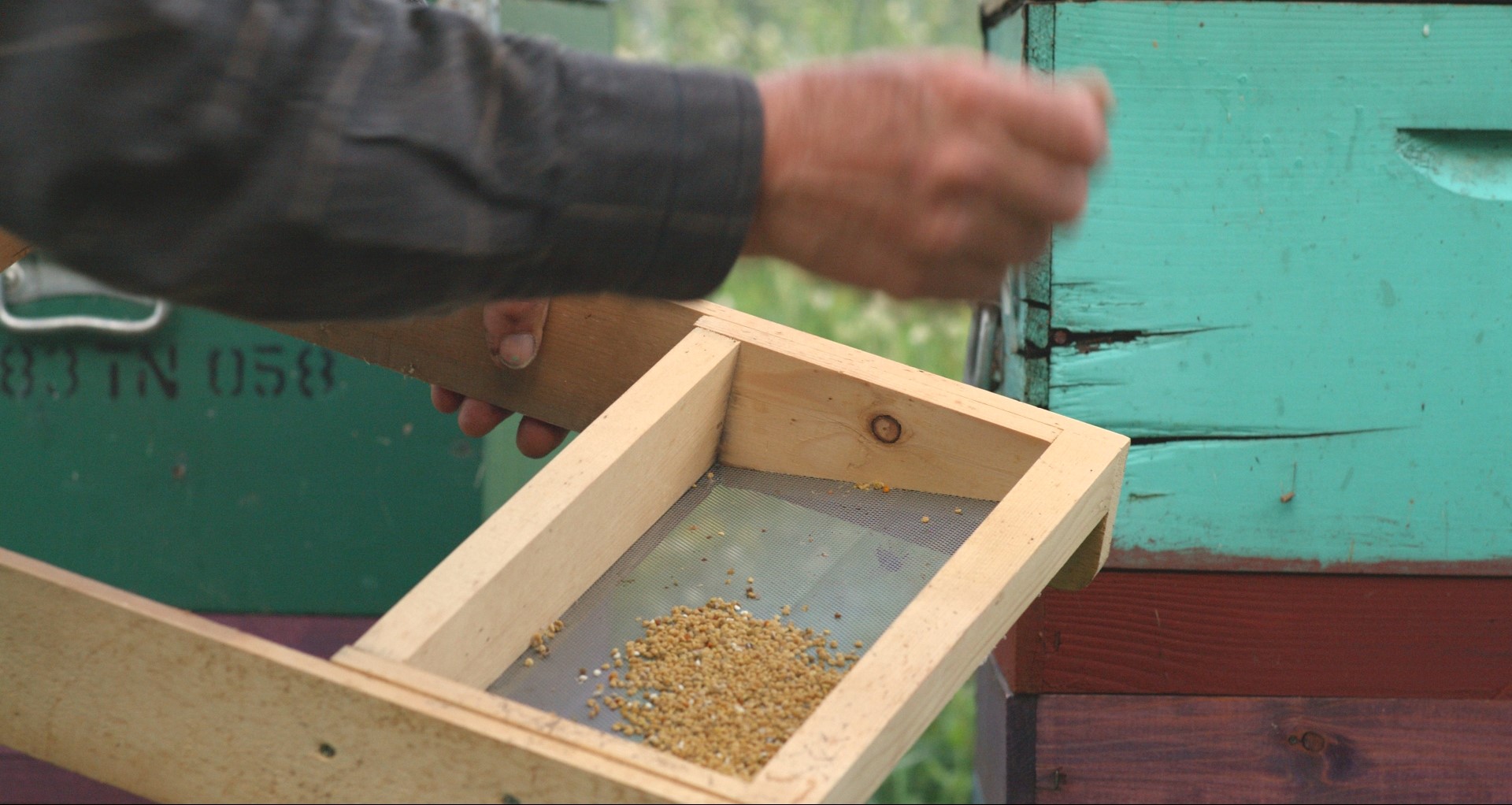
Collection takes place through pollen traps installed at the entrance to the hives. When they return, the bees pass through a perforated grid with 4.8-millimeter openings. The body passes through, but part of the pollen accumulated on the hind legs detaches and falls into the drawer at the base of the trap. Within 48 hours of collection, the material is labeled, placed in bags, and stored at at least minus 18°C to prevent alterations before analysis.
VISUAL
CURRENT RELEVANCE AND IMPACT OF THE THEME
Environmental quality and tools for reading it: a concrete front between agriculture, public health, and responsibility.
Bee-based biomonitoring as a low-impact, repeatable, non-invasive method.
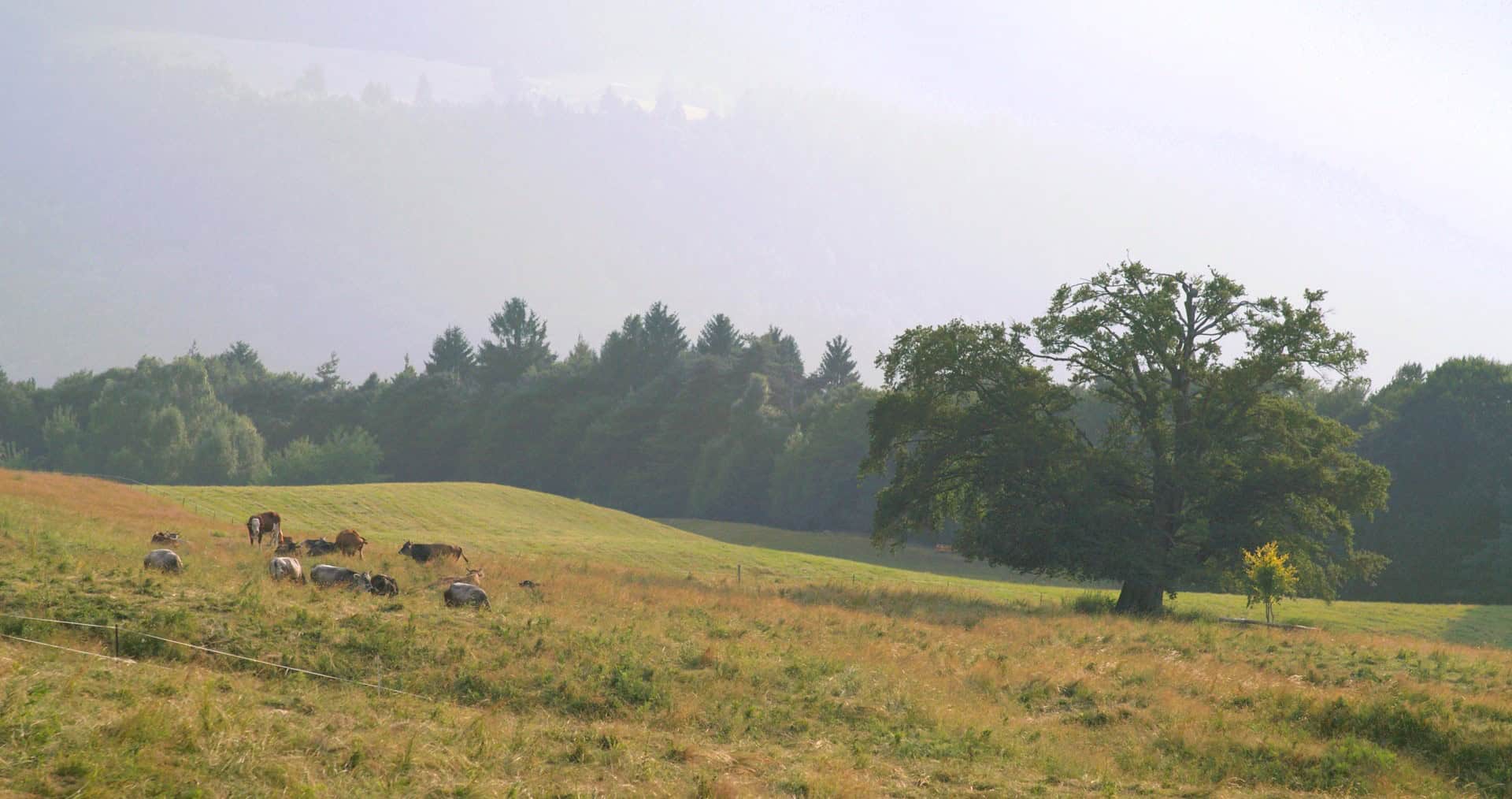
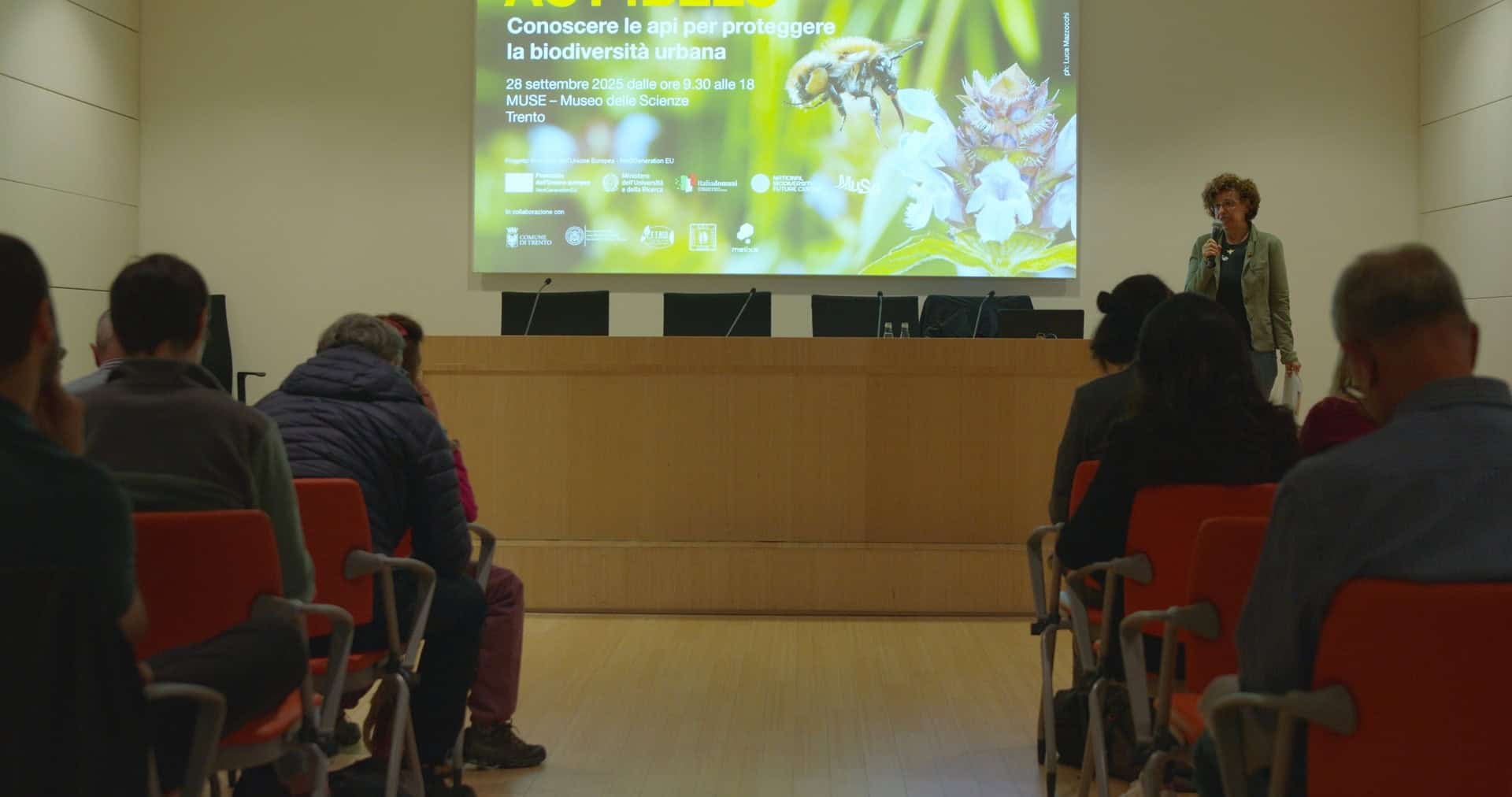
In Northern Italy, where intensive fruit farming coexists with natural areas and images of “unspoiled nature,” bee-based biomonitoring can challenge visual and cultural balances. Through pollen analysis, the film opens a concrete issue between agriculture, public health, environmental responsibility, and scientific knowledge. Through testimonies in Germany and meetings and exchanges with Angeli, WITHIN A BEE'S FLIGHT shows whether and how a common European response is possible, and how deeply sustainability concerns everyone.
The method is part of a European network that promotes widespread pollinator monitoring and experiments with forms of citizen science as a practice of environmental participation. The film follows its construction, limits, and potential.
PRODUCTION NOTE
WITHIN A BEE'S FLIGHT follows scientific research as it takes shape among laboratory, territory, and public space. The film is built alongside researchers, beekeepers, cultural institutions, and citizens involved in the project, observing the concrete gestures of pollen collection, analysis, and data presentation. At its center is the work of Professor Sergio Angeli, who uses environmental biomonitoring to investigate what bees actually collect in the places they cross. The narrative is born from the encounter between scientific rigor and documentary observation, allowing the link between environmental quality, agricultural practices, and transformations of the territory to emerge. From a production standpoint, the project is based on a network that is already active and rooted in the contexts involved, making continuous and concrete work possible. At the same time, the dialogue with German research contexts and European scientific interlocutors broadens the scope of the film and strengthens its international dimension. A volo d’ape is therefore a project born from a specific context that opens onto a European cultural and scientific perspective.
PRODUCTION COMPANY
KORABI was founded in Bolzano as an independent production company. Formed by Annachiara Gislimberti, Gabriele Borghi, and Erald Dika, it brings together different skills and complementary perspectives, creating a shared path. We believe in the power of stories to open new perspectives and reach a broad audience with original, authentic narratives.
We approach every project with the same spirit, telling original stories capable of reaching a wide audience. For us, cinema is a tool that can transform the gaze, stimulate dialogue, and foster cultural change. We believe stories can broaden perspectives and touch hearts. One of our main goals is to develop projects that combine entertainment and quality, with the conviction that every story, when told with care, can leave a mark.